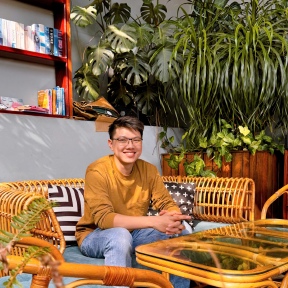
Senior Full-Stack Engineer · Team Leader · Backend & Distributed Systems
Full-Stack Software Engineer with 10 years of experience across embedded systems, cloud-native web platforms, and IoT data pipelines. Delivered production systems for enterprise, currently leading engineering at Personify Inc Vietnam — overseeing technical strategy, AI productivity initiatives, and team development. Comfortable across the full stack, from C++ desktop applications and Windows tooling to React front-ends, Java/Spring Boot microservices, and AWS infrastructure.
Someone at work drew this maturity curve on a whiteboard a few months back: gated, assisted, parallel, supervised, AI-native. Cute framing. I laughed at “AI-native” because it sounded like a LinkedIn post. Then I actually looked at where I sit on it and stopped laughing.
Parallel. Third box from the left. I’ve been sitting there since maybe June.
What Parallel actually feels like # Nobody warns you that “parallel” mostly means more browser tabs. Right now I’ve got six worktrees open — feat/rate-limit, fix/flaky-webhook-test, four others I’d have to alt-tab to name — each running its own agent, each waiting on me for something. My job title didn’t change but the job did. I used to produce the diff. Now I referee five diffs I didn’t write and one I’m too tired to remember starting.
Building in public is uncomfortable. You ship something half-baked and people see it. You write down a thought before it’s fully formed and it’s there, forever, attached to your name. That friction is the point.
The default is to hide # Most people — myself included, for a long time — treat their work like a draft. Always one more iteration before it’s ready to show. Always one more feature before the product is good enough. Always one more revision before the post is worth publishing.
Every year a new framework launches with the promise of solving the fundamental problems of software development. Every year engineers adopt it with enthusiasm. Every year the same problems resurface, just in a new form.
The appeal of new # New technology is exciting because it represents possibility. Before you’ve built anything real with a new tool, you can project onto it all the things you wish your current stack could do. The ergonomics feel better because you haven’t hit the edges yet.